




The Influence of Urbanization on Traditional Marital Roles in Nigeria
Shifts in Gender Expectations
Urbanization significantly alters gender roles within Nigerian marriages.
Women in cities increasingly participate in the workforce.
Consequently, many couples share domestic responsibilities more than before.
This shift challenges the traditional expectation of women as solely homemakers.
Moreover, men gradually embrace roles beyond financial provision.
Many urban husbands contribute to childcare and household chores.
These changing dynamics foster more egalitarian partnerships in marriages.
Impact of Economic Factors
Economic pressures in urban areas influence marital roles deeply.
Dual-income households become more common in Nigerian cities.
This financial cooperation affects decision-making within marriages.
For example, couples jointly plan budgets and long-term goals.
Additionally, urban living costs require increased collaboration between spouses.
Often, economic necessity propels women to pursue careers actively.
Thus, financial independence reshapes power balances in marital relationships.
Changing Social Norms and Family Structures
Urbanization fosters exposure to diverse cultural values and lifestyles.
Many young couples in cities delay marriage compared to rural norms.
This delay impacts traditional expectations regarding age and family size.
Furthermore, nuclear family structures gain prominence over extended family systems.
Such changes influence childcare and eldercare arrangements.
Urban couples adapt by negotiating roles that suit modern lifestyles.
Effects on Communication and Relationship Dynamics
Increased access to education and technology improves spousal communication.
Couples utilize digital tools to manage household and emotional needs.
This connectivity encourages openness and mutual understanding.
Besides, urban marriages emphasize negotiation and compromise more openly.
Therefore, traditional authoritative patriarchal models give way to partnership models.
Challenges Arising from Urbanization
Despite positive changes, urbanization also introduces stressors for couples.
Work demands often reduce time available for family bonding.
Consequently, some couples experience conflicts over role expectations.
Additionally, migration may separate couples from extended family support.
This loss complicates child-rearing and domestic assistance traditionally provided.
Nevertheless, many spouses creatively balance these pressures through communication.
Examples of Urban Couples Navigating Role Transformations
Maryam and Olusegun exemplify a modern Lagos couple balancing work and home.
She manages an IT firm while he shares cooking and childcare duties.
Their partnership departs from strict traditional gender roles yet respects cultural values.
Similarly, Akin and Funmi in Abuja jointly plan finances while dividing household tasks.
They openly discuss their aspirations, reflecting evolved marital dynamics in cities.
Their experiences highlight urbanization’s role in redefining marriage in Nigeria.
Impact of Increased Education and Career Focus on Marriage Dynamics
Shifts in Priorities Among Nigerian Couples
More Nigerians pursue higher education than ever before.
This trend influences their approach to marriage and relationships.
Consequently, individuals prioritize career development alongside personal life.
For example, Adaobi Nwosu, a Lagos-based marketing executive, delayed marriage to focus on her career.
This shift challenges traditional expectations of early marriage and large families.
Moreover, educated couples often discuss goals extensively before committing.
Changing Gender Roles Within Marriages
Higher education fosters a better understanding of gender equality.
Men like Chinedu Obi now support their spouses’ professional ambitions.
Similarly, women embrace leadership roles both at work and at home.
This trend redefines household responsibilities and decision-making processes.
Consequently, marriages become partnerships grounded in mutual respect and shared duties.
Balancing Career and Family Life
Many couples face challenges balancing demanding jobs and family expectations.
Grace and Tunde Eze from Abuja manage their time carefully.
They use digital tools to coordinate schedules and childcare responsibilities effectively.
Employers such as Nebula Solutions offer flexible work arrangements to support couples.
Hence, work-life balance increasingly depends on both partners’ cooperation and employer policies.
Effects of Education and Career Focus on Marriage Stability and Satisfaction
Education encourages couples to communicate openly about their aspirations.
They seek compatible partners who respect career goals and personal growth.
However, stress from career demands can strain relationships if unaddressed.
Marriage counselors like Amina Sule emphasize emotional intelligence as a vital skill.
Greater awareness of mental health promotes healthier marriages under modern pressures.
Key Changes in Nigerian Marriages Due to Education and Career Priorities
- Delay in marriage age due to educational pursuits
- More equitable gender roles and shared responsibilities
- Increased negotiation between partners on family planning
- Greater need for balancing careers and personal life
- Enhanced focus on communication and mental well-being
Changing Perceptions of Gender Roles Within Nigerian Marriages
Traditional Gender Expectations and Their Evolution
Traditional Nigerian marriages often emphasized clearly defined gender roles.
Men were expected to be the primary breadwinners.
Women typically managed household duties and cared for children.
However, modern lifestyles have begun shifting these traditional expectations.
In cities like Lagos and Abuja, dual-income households have become more common.
As a result, many couples share domestic responsibilities equally.
The Influence of Education and Employment Opportunities
Increased access to education has empowered more Nigerian women to seek careers.
For instance, many women now work in banking, technology, and entrepreneurship.
Consequently, this economic independence changes how couples negotiate household roles.
Men, like Emeka and Chika, often support their wives’ professional ambitions.
This shift promotes more egalitarian partnerships in contemporary marriages.
Changing Attitudes Among Younger Generations
Young couples increasingly question rigid gender norms.
They prioritize mutual respect and shared decision-making in their marriages.
Social media platforms, such as Instagram and Twitter, foster discussions on gender equality.
Additionally, influencers like Adaobi and Tunde advocate progressive views on partnership roles.
Therefore, younger Nigerians view marriage as a collaboration beyond traditional gender scripts.
Challenges and Opportunities in Shifting Gender Roles
Despite progress, some cultural expectations still pressure couples to conform.
Often, families expect women to prioritize homemaking over careers.
Nevertheless, couples like Ifeanyi and Funke negotiate compromises that respect both partners’ goals.
Furthermore, organizations like Femme Africa provide resources to support women balancing work and family.
This evolving perspective creates opportunities for healthier, more balanced marriages.
Examples of Shared Roles in Contemporary Nigerian Families
Many couples share financial responsibilities and childcare duties.
Household chores are often divided based on availability and preference.
Partners communicate openly about expectations and adjust roles as needed.
For example, Chinedu and Mbali alternate cooking and managing bills week by week.
This flexibility strengthens their partnership and mutual understanding.
Similarly, couples attribute improved marital satisfaction to this equitable approach.
Uncover the Details: ZIONIST EVENT SERVICES in Lagos Offering Event Staffing and Drink Services
The Role of Technology and Social Media in Shaping Marital Communication
Technology as a Communication Tool in Marriages
Technology now plays a central role in how married couples communicate daily.
Many couples use smartphones and instant messaging apps to stay connected throughout the day.
Consequently, tools like WhatsApp and Telegram are popular among Nigerian couples.
These platforms allow for quick sharing of thoughts and emotions despite busy schedules.
Moreover, video calls help maintain emotional intimacy, especially for couples separated by distance.
For example, Chike and Ada rely on video chats during work travels.
Additionally, technology supports scheduling joint activities and reminders, keeping couples organized.
Thus, technology facilitates more consistent and convenient communication in marriages.
Influence of Social Media on Marital Dynamics
Social media shapes how couples present their relationships publicly.
Many Nigerian couples share moments on platforms like Instagram and Facebook.
This sharing can strengthen bonds by celebrating milestones with friends and family.
However, social media sometimes triggers misunderstandings and jealousy between spouses.
For instance, interactions with others may be misinterpreted, causing trust issues.
Therefore, couples must navigate social media carefully and establish clear boundaries.
Furthermore, social media exposes couples to diverse relationship ideas and advice online.
This exposure influences expectations and communication styles within marriages.
Challenges and Opportunities of Digital Communication
While technology enhances accessibility, it also introduces risks of miscommunication.
Text messages often lack tone, leading to possible misunderstandings between partners.
Similarly, overreliance on digital tools may reduce face-to-face interactions.
For example, Ifeanyi and Nneka found that texting replaced many of their in-person talks.
On the other hand, technology offers new ways to express affection creatively.
Sending voice notes or digital love letters can strengthen emotional connections.
Overall, couples benefit by balancing digital communication with personal interaction.
Strategies for Healthy Communication with Technology
Married couples should set specific times to engage in meaningful conversations offline.
They can also agree on social media guidelines to respect privacy and trust.
Implementing digital detoxes occasionally helps avoid communication burnout.
Support from relationship coaches like Amaka Obi is increasingly popular in Nigeria.
These experts guide couples in navigating modern communication challenges effectively.
By consciously managing technology, couples can deepen understanding and strengthen bonds.
Uncover the Details: Dmikoy Beauty Studio in Port Harcourt | Luxury Beauty Services Since Inception
Economic Factors Affecting Marriage Decisions and Stability
Financial Readiness Influencing Marriage Timing
Many Nigerian couples delay marriage due to financial uncertainties.
Adeola and Emeka chose to wait until they secured steady jobs.
Therefore, economic stability often dictates the timing of marriage decisions.
Rising living costs in Lagos and Abuja pressure couples to prioritize savings.
Housing affordability shapes when couples feel ready to start families.
Impact of Employment and Income on Marital Stability
Regular income streams help maintain harmony in many Nigerian marriages.
Job instability can lead to increased marital conflicts in households like Mariam’s.
Uzoma struggles with irregular income, affecting his relationship with Chioma.
Consequently, employment security plays a crucial role in sustaining marriages.
Couples often seek additional income sources to reduce financial stress.
Economic Pressures from Family Obligations
Many couples face demands to support extended family members financially.
This obligation can strain personal finances and cause tension, as seen with Ifeanyi.
Amina balances her household expenses with supporting her siblings.
Managing these pressures requires careful financial planning and communication.
Unresolved economic expectations may impact marital satisfaction negatively.
Changing Economic Roles Within Marriage
Modern Nigerian marriages witness shifting financial roles between partners.
Chinedu supports his family while Ngozi pursues entrepreneurship.
This dynamic challenges traditional expectations about male and female financial roles.
Dual-income households often experience improved financial resilience.
However, role reversals may sometimes cause misunderstandings without open dialogue.
Influence of Economic Policies and Market Trends
Government policies affect employment rates and income levels nationwide.
Reforms in the agricultural sector impact rural families like the Okafors.
Inflation significantly affects purchasing power and savings capacity.
As a result, couples adjust their budgets to cope with changing economic conditions.
Understanding macroeconomic trends helps couples make informed decisions.
Strategies Couples Use to Overcome Economic Challenges
Many couples adopt budgeting and joint financial planning to improve stability.
Funke and Tunde invest in real estate to secure future assets.
Others rely on community savings groups to access emergency funds.
Couples also pursue skill development to enhance employment opportunities.
Ultimately, proactive financial management strengthens marital bonds amid economic pressures.
Gain More Insights: Redemyrald Events Lagos | Luxury Wedding and Corporate Event Planning Services
Balancing Modern Lifestyles with Cultural and Familial Marriage Expectations
Changing Personal Priorities in Contemporary Nigeria
Many young Nigerians prioritize career growth and personal development today.
Consequently, marriage often takes a secondary role in early adulthood.
Furthermore, city living encourages independence and self-reliance among individuals.
This shift sometimes clashes with traditional views on early marriage.
For example, Bisi, a Lagos-based marketing executive, delayed marriage for career stability.
Influence of Cultural Traditions on Marriage Decisions
Cultural values remain deeply rooted in Nigerian families.
Parents often expect children to marry within their ethnic or religious groups.
Moreover, extended family involvement impacts decisions related to marriage timing.
This participation sometimes creates tension for couples seeking autonomy.
Thus, balancing respect for traditions with personal choice remains challenging.
Negotiating Familial Expectations and Individual Desires
Couples like Amina and Chuka openly communicate with their families about marriage plans.
They strive to align their wishes with family expectations through dialogue.
Also, negotiation helps to ease generational gaps and prevent conflict.
Families increasingly appreciate modern perspectives when explained respectfully.
Still, some families hold firmly to customary marriage practices.
Practical Strategies for Harmonizing Lifestyles and Expectations
Couples adapt by incorporating cultural ceremonies into modern wedding celebrations.
They also schedule traditional rites around career and urban lifestyle demands.
Open-minded families appreciate flexibility and new forms of honoring customs.
Additionally, premarital counseling helps address intergenerational expectations effectively.
These approaches foster understanding and unity among all parties involved.
Impact of Social Media and Technology
Social media platforms expose Nigerians to diverse marriage ideals worldwide.
Younger generations often share modern relationship experiences online.
This exposure broadens perspectives beyond localized cultural norms.
Consequently, some families become more accepting of individual lifestyle choices.
However, misinformation online can occasionally reinforce unrealistic expectations.
Community Support and Emerging Trends
Support groups like Lagos Marriage Network provide guidance blending tradition and modernity.
Events promoting healthy relationships highlight respect for cultural roots and personal freedom.
Moreover, urban neighborhoods foster peer networks that discuss such marriage challenges.
This support enables couples to navigate expectations with confidence.
In turn, a gradual shift toward balanced marriage norms is emerging across Nigeria.
Discover More: Only1Djmimi DJ and Sound Services in Badagry Lagos with Nationwide Event Coverage
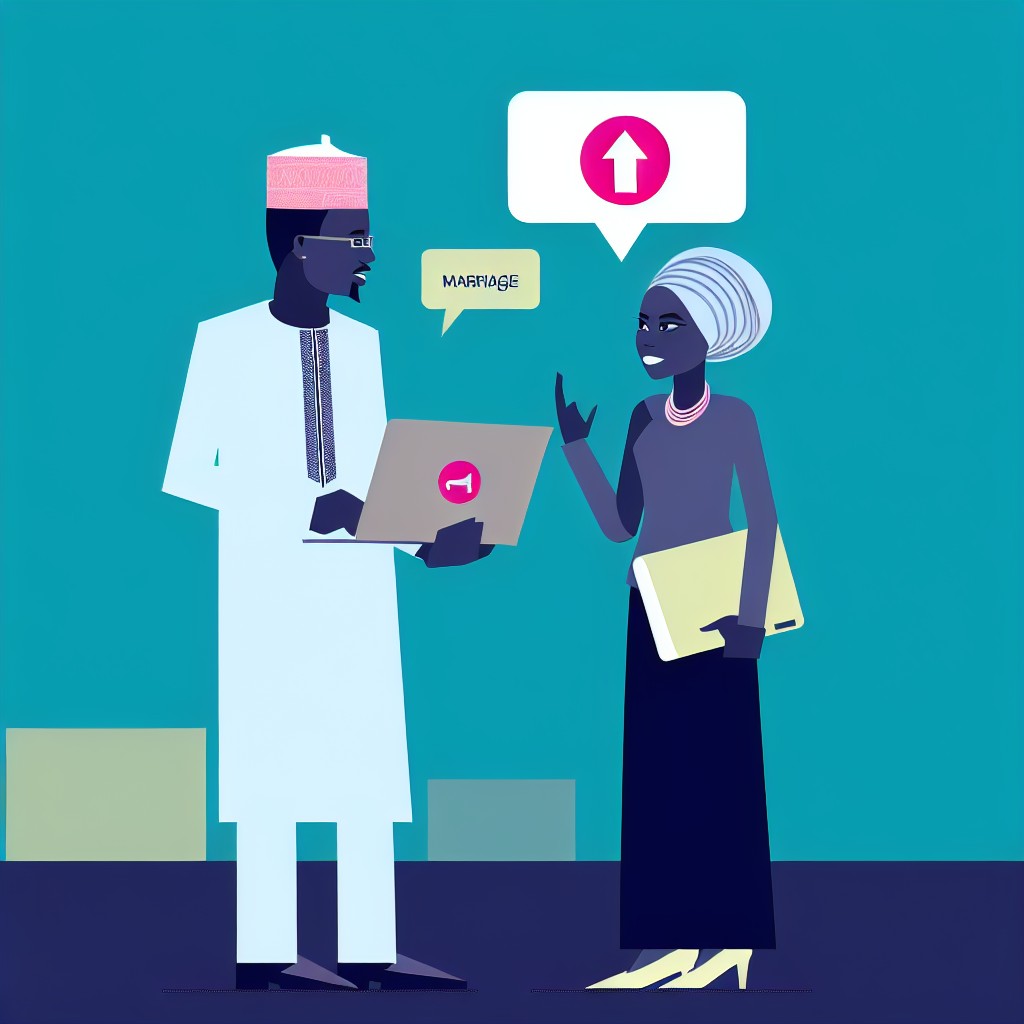
Trends in Delayed Marriage and Their Societal Implications
Shifts in Marriage Age Patterns
Modern lifestyles in Nigeria have influenced people to marry later than before.
Young adults increasingly prioritize education and career advancement first.
For example, Chinedu Obi, an Abuja-based financial analyst, married at 33.
Similarly, many university graduates delay marriage to build financial stability.
Consequently, the average age of first marriage has steadily increased in urban areas.
Causes of Delayed Marriages
Economic challenges make financial readiness a critical factor in choosing marriage timing.
Moreover, higher education enrollment keeps many in school longer than previous generations.
Also, shifting cultural values emphasize personal growth and independence before marriage.
Urbanization has introduced new lifestyles that encourage delayed partnerships.
Additionally, changing gender roles allow women to pursue careers before settling down.
Societal Implications of Later Marriages
Delayed marriages affect population growth with lower birth rates becoming more common.
Furthermore, family structures evolve as couples marry older and start families later.
This trend also influences inheritance practices and elders' roles within their communities.
Social expectations adapt as communities grow accustomed to new marriage timelines.
Meanwhile, some traditional leaders call for balance between modernity and cultural norms.
Benefits Observed from Delayed Marriages
Longer courtships help partners better understand each other's values and goals.
Also, financial preparedness typically leads to more stable households.
Delayed marriage can improve emotional maturity, leading to healthier relationships.
Additionally, couples often achieve greater career satisfaction before starting families.
Moreover, children born to older parents may benefit from improved socio-economic conditions.
Challenges and Community Responses
Despite benefits, delayed marriages sometimes cause family pressure and societal stigma.
For instance, parents may worry about their children's prospects amid changing norms.
In response, community groups organize seminars promoting dialogue about new marriage trends.
Religious organizations play roles in guiding youth through evolving expectations.
Meanwhile, marriage counselors like Amina Suleiman help couples navigate delayed commitments.
Future Directions in Nigerian Marriage Trends
Nigerian society is gradually embracing diverse marriage timelines without rigid judgments.
Young people like Tolu Ajayi balance career ambitions alongside thoughtful relationship choices.
Governments and nonprofits increasingly support education on healthy partnerships and financial literacy.
Technological advances also facilitate new ways to meet potential partners over longer periods.
Ultimately, Nigerian marriages will continue evolving alongside modern lifestyle shifts.
Effects of Globalization on Nigerian Marital Traditions and Ceremonies
Transformation of Traditional Wedding Practices
Globalization introduces diverse cultural influences into Nigerian weddings.
Many couples blend local customs with international wedding trends.
Traditional attire now incorporates modern styles and fabrics.
Some ceremonies integrate Western elements like bridal gowns and tuxedos.
Destination weddings abroad are becoming popular among Nigerian couples.
This shift reflects a desire to merge heritage with contemporary tastes.
Changing Roles and Expectations Within Marriages
Global communication exposes couples to new ideas about partnership roles.
Nigerian spouses increasingly share household responsibilities equally.
Modern couples often negotiate career and family decisions jointly.
This contrasts with previously rigid gender roles in many Nigerian communities.
Decision-making in marriages reflects more democratic and inclusive patterns.
Impact on Traditional Ceremonial Rituals
Global influences sometimes reduce the length of customary marriage rites.
Some rituals are simplified to fit busy urban lifestyles.
Many couples strive to preserve core cultural elements despite changes.
Local elders and families negotiate which traditions remain essential.
Technology enables virtual participation in ceremonies for distant relatives.
Economic Considerations and Wedding Expenditures
Globalization raises expectations for lavish weddings and extravagant celebrations.
Couples often spend significant amounts to impress guests and social circles.
Wedding planners like Amara Events and Obinna Bridal Services adapt to these demands.
They offer packages combining global aesthetics with indigenous customs.
Some families advocate for modest ceremonies to reduce financial burdens.
Role of Media and Social Networks
Television, movies, and social media showcase diverse wedding styles worldwide.
Nigerian couples draw inspiration from global and regional ceremonies alike.
Platforms like Instagram promote sharing of personalized matrimonial moments.
This exposure encourages creativity and experimentation in wedding planning.
Social media connects brides and grooms with international suppliers and designers.
The Rise of Dual-Income Households and Its Impact on Family Life
Changing Economic Dynamics in Nigerian Families
Many Nigerian families now depend on incomes from both spouses.
This shift stems from increasing financial demands and opportunities.
Moreover, women pursue careers to support household finances.
Consequently, traditional single-income family models have evolved significantly.
For example, Tosin and Ada balance their banking jobs with family care.
Implications for Household Responsibilities
As both partners work, household chores are often shared more equally.
However, many couples still face challenges coordinating daily tasks.
Therefore, open communication becomes essential to manage responsibilities.
For instance, Taofik and Amara schedule cleaning and cooking shifts weekly.
Additionally, some families hire domestic help to ease the workload.
Effect on Childcare and Parenting Roles
Dual incomes influence decisions regarding childcare arrangements.
Parents increasingly rely on daycare centers or relatives for support.
Importantly, fathers tend to take more active roles in childrearing.
Yet, balancing work and parenting often causes stress and fatigue.
Funke and Chinedu share parenting duties to maintain harmony at home.
Impact on Marital Relationships and Communication
Time constraints due to work can reduce couples’ quality time together.
Nonetheless, many couples prioritize regular conversations to stay connected.
Furthermore, couples like Amina and Emeka use technology to maintain daily contact.
This trend encourages more intentional efforts to nurture marital bonds.
Although challenges exist, dual careers can strengthen partnerships through collaboration.
Financial Benefits and Challenges
Dual incomes improve families’ economic stability and ability to invest.
For example, the Eze family expanded their home thanks to combined earnings.
On the other hand, increased expenses on childcare and commuting may add pressure.
Thus, couples must budget carefully to maximize financial gains.
Financial advisors like Ms. Funmilayo Odunusi recommend joint planning for success.
Shifts in Conflict Resolution and Counseling Practices Among Modern Couples
Evolving Approaches to Conflict Resolution
Modern Nigerian couples increasingly favor open communication when addressing conflicts.
They prefer discussing challenges directly instead of relying solely on family elders.
Additionally, couples tend to seek mutual understanding to resolve disagreements effectively.
Technology plays a vital role by enabling instant and thoughtful conversations through messaging apps.
Moreover, many partners use conflict resolution techniques learned from workshops and seminars.
Consequently, this shift reduces misunderstandings and fosters healthier relationships.
The Rise of Professional Counseling
Couples now openly embrace professional counseling services more than before.
Psychologists like Dr. Ifeanyi Eze and therapists such as Adaobi Okeke are gaining recognition.
These experts provide unbiased advice tailored to modern relationship dynamics.
Furthermore, counseling sessions offer safe spaces for partners to express their feelings.
Online therapy platforms also expand access to counseling for busy couples in urban centers.
Therefore, seeking professional help has become less stigmatized and more normalized.
Integration of Cultural Values with Modern Practices
Many couples combine traditional values with contemporary counseling methods.
For instance, community leaders sometimes collaborate with licensed therapists.
This blend preserves cultural identities while promoting effective conflict resolution.
Couples like Nkem and Ayo Odutola exemplify this hybrid approach in Lagos.
They attend joint counseling sessions guided by both a therapist and a respected family elder.
This integration strengthens their bond through respect and understanding.
Popular Conflict Resolution Techniques Used Today
- Active listening to ensure both partners feel heard and validated.
- Use of “I” statements to express feelings without triggering defensiveness.
- Setting agreed-upon timeframes to cool down before discussing heated topics.
- Collaborative problem-solving that focuses on solutions rather than blame.
- Scheduling regular check-ins to address small issues before they escalate.
Implementing these methods helps modern Nigerian couples manage conflicts better.
Additional Resources
29+ Memoirs and Autobiographies from African Women – bookshy


