



Understanding Cultural Expectations and Traditions in Nigerian Marriages
Role of Family in Marriage
Family plays a central role in Nigerian marriages.
Relatives often influence decisions related to marriage arrangements.
Couples usually consult elders before formalizing their union.
This involvement helps maintain respect for cultural values.
Extended families provide emotional and financial support to the couple.
Importance of Traditional Ceremonies
Traditional ceremonies celebrate the union of two families in Nigeria.
These events vary widely across ethnic groups and regions.
For example, the Yoruba have the engagement rite called ‘Introduction’ or ‘Ikuye’.
The Igbo practice the ‘Igba Nkwu’ or wine-carrying ceremony.
These ceremonies symbolize respect for ancestors and community.
They reinforce the couple’s commitment in front of family and friends.
Gender Roles and Expectations
Traditional gender roles often shape marriages within Nigerian society.
Men are typically viewed as providers and heads of households.
Women usually manage domestic duties and care for children.
These roles are evolving due to urbanization and education.
More couples now embrace shared responsibilities and partnership.
Balancing Modernity and Tradition
Many Nigerian couples strive to blend tradition with modern values.
They honor cultural practices while adapting to contemporary lifestyles.
Some still conduct traditional ceremonies before civil weddings.
This balance helps maintain cultural identity and personal choice.
Open communication supports mutual understanding of expectations.
Common Cultural Practices Influencing Marriage Dynamics
- Bride price payment symbolizes respect and commitment to the bride’s family.
- Polygamy remains accepted in some communities, though less prevalent today.
- Respect for elders shapes conflict resolution within the marriage.
- Religious practices significantly impact marital life and decisions.
Recognizing these customs helps couples navigate their married life smoothly.
Effective Communication Strategies for Couples in Nigerian Society
Understanding Cultural Context
Nigerian culture deeply influences how couples communicate with each other.
Respect for family hierarchy and traditions often shapes dialogue patterns.
Moreover, indirect communication can be common to avoid conflict.
Therefore, couples must consider cultural nuances when discussing sensitive topics.
Building Open and Honest Dialogue
Open communication fosters trust and emotional connection between partners.
Chinedu and Amaka, a couple from Lagos, share their feelings daily to stay connected.
They listen actively and respond without judgment to create a safe space.
Besides, regular conversations prevent misunderstandings and build mutual respect.
Using Nonverbal Communication Effectively
Nonverbal cues like facial expressions and gestures carry significant meaning in Nigerian marriages.
Nneka often uses warm eye contact to reassure her spouse during discussions.
Likewise, respectful body language shows attentiveness and care.
Consequently, couples should be mindful of how their nonverbal signals affect each other.
Resolving Conflicts Constructively
Disagreements are natural, but managing them respectfully strengthens marriages.
Olu and Ifeoma adopt calm tones and avoid blaming when conflicts arise.
They focus on finding solutions that satisfy both partners.
In addition, seeking advice from trusted elders helps resolve deeper issues.
Incorporating Modern Communication Tools
Technology offers new ways to maintain connection despite busy schedules.
Funke and Tunde use WhatsApp messages to express love during work hours.
They also schedule calls to discuss important matters face-to-face virtually.
Therefore, couples can balance tradition and technology to improve communication.
Supporting Each Other’s Emotional Needs
Emotional support requires understanding each other’s feelings and frustrations.
Adetola often encourages her husband, Emeka, when he faces work pressures.
Similarly, Emeka listens attentively and offers reassurance in stressful times.
Thus, empathetic communication nurtures a balanced and loving marriage environment.
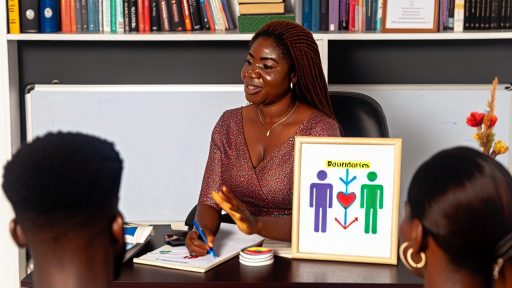
Establishing Family Communication Boundaries
Nigerian families tend to be closely involved in couples’ lives.
To maintain harmony, couples like Amina and Ibrahim set clear boundaries with relatives.
They kindly communicate their decisions while respecting elders’ opinions.
Consequently, this balance keeps external influences positive rather than disruptive.
Balancing Family Obligations and Personal Marital Needs
Understanding Family Expectations in Nigerian Society
Nigerian culture places great emphasis on family connections and responsibilities.
Couples often face pressure to meet extended family expectations.
It is essential to recognize these cultural values while maintaining marital harmony.
Understanding relatives’ concerns helps reduce conflicts within the marriage.
Communicating Personal Needs Clearly
Open communication between spouses fosters mutual understanding and respect.
Chinedu and Ifeoma always share their feelings about family obligations.
They actively listen to each other’s concerns to find practical solutions.
Setting boundaries helps protect personal time and emotional space.
Creating a Healthy Balance Through Joint Decisions
Spouses should make decisions together regarding family involvement and commitments.
For instance, deciding when to attend family events as a team strengthens trust.
Flexible planning allows couples to honor family without neglecting their relationship.
Emeka and Amara prioritize their marriage while respectfully managing family duties.
Strategies for Managing Family Demands Respectfully
Establish clear but polite ways to decline excessive family requests.
Maintain consistent routines for couple time to nurture the marital bond.
Use negotiation to balance household chores and family visits.
Seek support from trusted community leaders or counselors if needed.
Advantages of Balancing Family Obligations with Marital Needs
Balancing these areas nurtures a stronger, more resilient marriage.
Couples experience less stress and enjoy more fulfilling relationships.
Children benefit from a loving and stable household environment.
In the long run, this balance contributes to healthier extended family dynamics.
Uncover the Details: The Role of Respect in Nigerian Marital Relationships
Importance of Mutual Respect and Trust in a Nigerian Marriage
Foundations of Mutual Respect
Mutual respect forms the cornerstone of a lasting Nigerian marriage.
It fosters understanding between partners.
This understanding creates harmony in daily life.
More importantly, respect allows spouses to appreciate each other's unique roles.
For example, Tunde and Adaobi value each other's opinions despite cultural pressures.
This respect leads to healthier communication.
It also reduces conflicts significantly.
Role of Trust in Strengthening Bonds
Trust acts as a vital glue holding couples together in Nigerian society.
It encourages openness between partners.
They share fears and hopes more freely.
When Ifeoma trusts Chukwuemeka, they navigate challenges with confidence and unity.
Furthermore, trust builds emotional security needed for marriage growth.
Without trust, misunderstandings escalate quickly.
Such escalation can potentially cause marital breakdown.
Approaches to Building Respect and Trust Together
Couples should actively practice listening to each other with empathy.
Additionally, fulfilling promises boosts trust in the relationship.
This fulfillment also reinforces mutual respect.
Nigerian couples can strengthen bonds by celebrating each other's successes sincerely.
They should address disagreements calmly without disrespect or blame.
Finally, involving family elders wisely can support respect and trust in marriage.
See Related Content: The Importance of Setting Boundaries in Nigerian Marriages
Managing Financial Responsibilities Together
Building Open Communication About Finances
Moses and Amaka openly discuss their financial goals regularly.
They share income details and monthly expenses transparently.
This approach creates trust and avoids misunderstandings about money.
Moreover, they plan together before making major purchases.
Clear communication helps prevent conflicts and promotes teamwork.
Creating a Joint Budget
The couple develops a shared budget tailored to their income and needs.
They list fixed costs like rent, utilities, and school fees.
Then, they allocate funds for groceries, transportation, and leisure.
Importantly, Moses and Amaka include savings and emergency funds.
A written budget guides their spending and financial decisions consistently.
Dividing Financial Responsibilities Fairly
Moses handles paying utility bills on time each month.
Meanwhile, Amaka is responsible for managing daily shopping expenses.
They agree on contributions proportional to their respective incomes.
This balance respects their individual capacities and promotes fairness.
In addition, they review responsibilities periodically to ensure fairness continues.
Planning for Long-Term Financial Security
The couple invests in long-term assets like land and education funds.
Additionally, they consult financial advisors such as Lagos-based Ngozi Financial Planning.
They also prioritize saving for their children’s future and retirement.
Consistent planning helps them build lasting financial stability together.
Furthermore, they regularly discuss adjustments needed for changing needs.
Supporting Each Other Through Financial Challenges
When Moses lost his job, Amaka took on extra work temporarily.
They maintained a supportive attitude without blame or resentment.
Their teamwork helped reduce stress during this difficult period.
They also sought advice from trusted friends like Chinedu on budgeting.
Facing challenges together strengthens their marriage and financial resilience.
Discover More: How to Navigate Cultural Differences in Marriage
Role of Extended Family and Community in Sustaining Marriage Harmony
Importance of Extended Family Support
Extended families play a crucial role in Nigerian marriages.
They provide emotional support to couples during challenging times.
Moreover, relatives often offer practical help, easing household responsibilities.
For example, Aunt Amaka may assist with childcare, allowing the couple more quality time.
Additionally, elders offer valuable advice based on their marital experiences.
Consequently, couples can navigate difficulties with wisdom from family guidance.
Community as a Guardian of Marital Values
The broader community reinforces social expectations that promote marital stability.
Community leaders, like Pastor Olumide, often mediate local family disputes.
They also organize events that bring families together, strengthening bonds.
In fact, communal activities foster shared responsibilities among neighbors and friends.
This collective involvement helps couples feel supported beyond their immediate family.
Therefore, the community acts as a safety net during marriage challenges.
Balancing Family Involvement and Couple Autonomy
While family and community support are beneficial, couples must maintain autonomy.
They should clearly communicate boundaries to relatives like uncles and cousins.
Respectful dialogue helps prevent interference in private marital decisions.
Furthermore, it ensures that advice is constructive rather than controlling.
Healthy boundaries cultivate mutual respect among couples and their support systems.
Ultimately, this balance preserves harmony within the marriage and extended relations.
Ways to Engage Family and Community Positively
Couples can invite families to share in celebrations and milestones.
This openness strengthens trust and mutual understanding.
They should also seek elders’ counsel during significant marital decisions.
Participating in community projects together fosters unity and cooperation.
Active involvement demonstrates appreciation for cultural traditions.
Such engagement creates a supportive environment where marriages thrive.
See Related Content: How to Foster Emotional Intimacy in Nigerian Marriages

Addressing Gender Roles in Nigerian Marriages
Traditional Expectations and Their Impact
Nigerian society often holds deeply rooted views on gender roles.
These expectations frequently assign specific duties to husbands and wives.
For instance, men are traditionally seen as providers.
Women typically manage household responsibilities and childcare.
Consequently, such views can limit personal growth and partnership equality.
However, evolving social norms encourage more balanced relationships.
Encouraging Open Dialogue Between Partners
Open communication is vital to challenge and redefine gender roles.
Celine and Emeka regularly discuss their expectations and responsibilities.
This dialogue helps them understand each other’s strengths and preferences.
Moreover, it promotes mutual respect and cooperation.
Therefore, couples should create safe spaces for honest conversations.
Promoting Equality Within Marriage
Sharing Responsibilities at Home
Equitable distribution of household tasks strengthens marital bonds.
Both partners should participate in chores, childcare, and finances.
For example, Ngozi and Tunde alternate cooking duties and budgeting.
Such actions reduce stress and prevent resentment from building up.
Additionally, sharing responsibilities models fairness for children.
Supporting Each Other’s Ambitions and Careers
Marriage should nurture individual aspirations while fostering teamwork.
Adesua encourages Jide’s career growth as he supports her business.
This mutual encouragement builds trust and deepens connection.
Furthermore, it breaks traditional molds where only one partner works.
Spouses must celebrate achievements and face challenges hand in hand.
Valuing Emotional Support Equally
Nigeria’s cultural norms often overlook men’s emotional needs.
Therefore, couples need to express feelings freely regardless of gender.
Chinwe makes effort to listen attentively to Ifeanyi’s concerns.
This openness fosters empathy and strengthens emotional intimacy.
Eventually, both partners feel valued and understood within the marriage.
Building a Partnership Based on Respect and Fairness
Respecting Individual Differences
Nigerian couples come from diverse ethnic, religious, and social backgrounds.
Recognizing these differences promotes tolerance in marriage.
Bola and Amaka value each other’s traditions while creating shared customs.
Respecting personal beliefs prevents unnecessary conflicts.
Consequently, marriages become more harmonious and resilient.
Making Decisions Together
Joint decision-making reflects equality and partnership.
Obinna and Funke consult each other on major family matters.
This approach fosters cooperation rather than control.
Besides, it ensures both voices are heard and valued.
Ultimately, couples build stronger foundations through shared choices.
Encouraging Continuous Learning and Growth
Equality in marriage flourishes when partners commit to personal development.
Participation in workshops and counseling benefits relationships.
For example, Amara and Emem attend seminars on marriage communication.
Such learning improves understanding and conflict resolution skills.
Consequently, couples adapt better to changes and challenges together.
Conflict Resolution Techniques Suited to Nigerian Cultural Contexts
Respecting Traditional Authority
In Nigerian society, elders play a crucial role in resolving conflicts.
Therefore, involving respected elders helps mediate marriage disputes effectively.
For example, families often call on village chiefs or community leaders for guidance.
This approach maintains harmony and honors cultural norms simultaneously.
Open Communication with Cultural Sensitivity
Couples should express their feelings honestly while respecting cultural expectations.
Additionally, they must listen attentively without interrupting one another.
This practice prevents misunderstandings and strengthens emotional bonds.
For instance, Tunde and Ifeoma use calm dialogue to address disagreements thoughtfully.
Utilizing Family Networks for Support
Family members act as mediators to facilitate peaceful conflict resolution.
They often provide advice based on shared cultural values and traditions.
Moreover, involving trusted relatives reduces tension between spouses.
This method emphasizes collective responsibility over individual disputes.
Applying Patience and Forgiveness
Patience is highly valued in Nigerian marriages to overcome challenges.
Couples learn to forgive mistakes and focus on long-term harmony.
This attitude helps to dissolve resentment and rebuild trust gradually.
For example, Emeka and Chioma practice forgiveness to sustain their relationship.
Engaging Religious Leaders for Guidance
Religious figures provide moral support tailored to cultural beliefs.
They offer counseling that aligns with spiritual values of the couple.
This guidance strengthens commitment and fosters mutual respect.
Many couples visit pastors or imams during difficult times for advice.
Effective Techniques for Peaceful Dialogues
- Speak respectfully and avoid harsh words.
- Focus on the issue, not personal attacks.
- Take breaks if emotions run too high.
- Seek common ground to find compromises.
- Use proverbs or stories to illustrate points gently.
These techniques help maintain respect and avoid escalation.
Balancing Modern and Traditional Approaches
Many Nigerian couples combine cultural wisdom with modern counseling methods.
They attend workshops while honoring family and community values.
This blend enhances understanding and equips couples with new skills.
For instance, the Adeyemi family integrates therapy and traditional mediation effectively.
Incorporating Religious Values and Practices to Strengthen the Marriage
Foundation of Shared Beliefs
Religious values provide a strong foundation for many Nigerian marriages.
Couples who share beliefs often experience deeper mutual understanding.
For example, Christian couples like Emeka and Chinyere find joy in prayer together.
Similarly, Muslim partners such as Aisha and Haruna rely on faith to navigate challenges.
Therefore, establishing common spiritual ground unites couples effectively.
Practicing Faith as a Couple
Consistent worship reinforces the bond between spouses.
Attending church or mosque together fosters a spirit of unity.
Additionally, participating in religious study sessions can enhance communication.
Maryam and Kolawole share weekly Quran study sessions to deepen their connection.
Likewise, Nkechi and Tunde engage in Bible study and fellowship regularly.
These practices encourage empathy and patience in married life.
Embedding Religious Rituals in Daily Life
Incorporating prayer or meditation strengthens spiritual intimacy each day.
Couples can create routines like morning prayers or evening gratitude moments.
For instance, Amaka and Chidi say a nightly prayer before bedtime.
Such rituals provide consistency and a shared sense of purpose.
Moreover, celebrating religious holidays together builds family traditions.
These customs enhance commitment and mutual respect over time.
Resolving Conflicts Through Religious Guidance
Couples often find religious teachings useful in managing disagreements.
Using scripture or teachings encourages forgiveness and reconciliation.
Pastors or Imams frequently offer marriage counseling based on faith principles.
For example, Pastor Adekunle helps couples find peace through biblical advice.
Similarly, Imam Usman guides spouses toward compassion and understanding.
This support helps sustain harmony during tough moments.
Encouraging Community Support
Religious communities provide vital support networks for married couples.
Engaging with church or mosque groups offers friendship and mentorship.
Folake and Samuel benefit from their church’s couples’ fellowship meetings.
Moreover, community prayers and events strengthen social bonds.
These connections reduce isolation and promote shared growth.
Balancing Tradition with Personal Beliefs
While tradition plays a role, couples should adapt rituals to fit their needs.
Open dialogue about faith prevents misunderstandings between spouses.
For instance, Chima and Ifeoma discuss how Islam influences their parenting.
This balance respects both cultural values and individual spirituality.
Ultimately, it fosters a peaceful and respectful home environment.
Prioritizing Quality Time and Emotional Connection Amidst Busy Lifestyles
Recognizing the Challenges of Modern Nigerian Life
Nigeria’s fast-paced environment makes balancing work and family demanding.
Many couples juggle careers, social obligations, and extended family duties.
Prioritizing quality time becomes essential for relationship growth.
Without it, emotional distance tends to grow between partners.
Intentional Scheduling of Shared Moments
Couples should deliberately allocate time on their calendars for each other.
For example, Adaeze and Emeka set aside Sunday evenings for conversation and relaxation.
This habit strengthens their emotional bond and reduces misunderstandings.
Scheduling date nights or weekend getaways refreshes the relationship.
Consistent effort helps maintain intimacy during busy seasons.
Effective Communication Builds Emotional Connection
Open dialogue encourages partners to share feelings and concerns honestly.
Active listening fosters empathy and mutual respect.
Funke and Tunde practice daily check-ins to stay emotionally connected.
These conversations provide reassurance and deepen trust over time.
Communication acts as the foundation of a balanced marriage.
Incorporating Cultural Values in Relationship Care
Respecting cultural practices enhances shared meaning and identity.
Nigerian customs often reinforce family unity and support systems.
Embracing rituals, such as family meals or festivals, can create lasting memories.
For instance, attending community events together nurtures a sense of belonging.
Culture plays an integral role in emotional connection.
- Use technology wisely by sending kind messages during the day.
- Engage in small acts of kindness, like preparing a favorite meal.
- Practice mindfulness together to reduce stress and enhance presence.
- Join support groups or couple’s workshops to strengthen your bond.
Implementing these strategies consistently can transform your marriage positively.
Additional Resources
Positive affirmations for a healthy marriage
10 Christian Marriage Books Every Couple Should Read Together