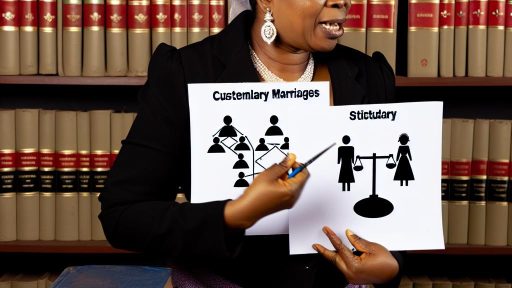




Definition and Scope of Customary Marriage Laws in Nigeria
Understanding Customary Marriage
Customary marriage in Nigeria refers to unions established according to indigenous customs.
These customs vary widely across Nigeria’s diverse ethnic groups.
Importantly, customary marriage laws recognize traditional practices and societal norms.
They differ significantly from statutory marriage laws governed by formal legal codes.
As a result, customary marriage reflects the unique cultural identity of Nigerian communities.
Legal Recognition of Customary Marriages
The Nigerian legal system acknowledges customary marriages as valid unions.
Courts recognize them based on compliance with relevant cultural norms and customs.
Furthermore, the Marriage Act and the Matrimonial Causes Act provide frameworks supporting these marriages.
Nevertheless, proper registration of customary marriages is encouraged to formalize the union.
Registration helps protect the rights of spouses and children under the law.
Key Elements of Customary Marriage
Customary marriage typically involves specific rites and ceremonies unique to each ethnic group.
These rites often include payment of bride price or dowry as a sign of agreement.
Consent from both parties and their families plays a crucial role in validating the marriage.
Additionally, witnesses from the community or family usually attest to the union.
Consequently, these elements ensure the marriage is accepted within the cultural context.
Scope and Applicability of Customary Marriage Laws
Customary marriage laws primarily apply to indigenous Nigerians practicing traditional customs.
They regulate matrimonial relationships, inheritance, and family obligations within these communities.
Also, they influence dispute resolution methods related to marriage and family issues.
However, non-indigenous individuals may choose to marry under statutory marriage laws instead.
Customary marriage remains an essential institution in Nigeria’s social and legal fabric.
Cultural Significance of Customary Marriages Across Different Nigerian Ethnic Groups
Role of Customary Marriages in Nigerian Society
Customary marriages hold deep cultural importance in Nigerian communities.
They serve as a formal union recognized by family traditions and ethnic customs.
Moreover, these marriages strengthen bonds between families and clans.
They also uphold ancestral heritage and social identity within each ethnic group.
Furthermore, customary marriages often reflect the values and beliefs of the community.
Customary Marriage Practices Among Major Ethnic Groups
Yoruba Traditional Marriage
The Yoruba people emphasize family consent and extensive ceremonies.
They perform engagement rites known as “Introduction” and “Traditional Wedding.”
Gift exchanges and negotiations between both families are essential.
Consequently, the ceremonies celebrate unity and mutual respect.
Igbo Marriage Customs
Igbo customary marriages focus on the bride price, known as “Ime Ego.”
The groom’s family presents items symbolizing commitment and appreciation.
Marriage is seen as joining two families, not just individuals.
Besides, the community actively participates in the traditional celebration.
Hausa-Fulani Marriages
The Hausa-Fulani people incorporate Islamic principles into their customs.
Marriage also involves religious rites including the Nikah ceremony.
Family elders play significant roles in negotiating and blessing the union.
These marriages reinforce social status and family alliances.
Social and Communal Impact of Customary Marriages
Customary marriages foster community cohesion and cultural continuity.
They provide social recognition and acceptance for couples.
Importantly, these unions ensure that lineage and inheritance practices persist.
They also create networks of mutual support among families.
Modern Adaptations and Variations in Customary Marriages
While traditional elements remain, many customs adapt to modern lifestyles.
Some Nigerian families combine customary rites with civil or religious ceremonies.
This fusion respects heritage while meeting legal requirements.
Thus, customary marriages continue evolving to suit diverse societal changes.
Legal Requirements and Procedures for Customary Marriages
Understanding Customary Marriage
Customary marriage is a union recognized by local traditions and cultural practices in Nigeria.
It involves specific rites performed according to the customs of the ethnic group.
Consequently, the Nigerian legal system recognizes these marriages under customary law.
Each ethnic group may have distinct traditions that guide marriage formalities.
Legal Framework Governing Customary Marriages
The Marriage Act and the Matrimonial Causes Act provide the legal background for customary marriages.
Also, the Marriage Act recognizes customary and statutory marriages equally.
State laws further clarify procedures, but customs primarily govern marriages.
Courts uphold customary marriages if they comply with local traditions and legal principles.
Essential Requirements for Customary Marriage
Both parties must freely consent to the marriage without any coercion.
The man and woman must be of marriageable age, usually 18 years and above.
Also, they must not be closely related by blood or marriage, respecting local customs.
Finally, the customary rites must be properly performed and witnessed.
Typical Procedures Involved
The process usually starts with an introduction ceremony between families.
Next, the groom’s family presents bride price or dowry as traditionally required.
Afterward, elders or family heads conduct traditional rites to formalize the union.
Witnesses affirm the marriage according to the community’s customary norms.
Registration and Documentation
Although not mandatory, registration of customary marriages is encouraged by law.
Registration helps protect spouses’ rights and facilitates legal recognition nationwide.
The couple can register their marriage at the local government registry or customary court.
They receive a customary marriage certificate upon successful registration.
Legal Implications of Customary Marriage
Customary marriage confers legal rights and obligations on both spouses.
This includes inheritance rights, maintenance, and child custody matters.
Court rulings generally respect customary marriage traditions unless they conflict with statutory law.
Therefore, understanding the local customs is vital for compliance and enforcement.
Gain More Insights: Civil, Traditional, or Religious? Choosing the Right Marriage Type in Nigeria
Roles of Family and Community in Customary Marriage Ceremonies
Family Involvement in Customary Marriage
The family plays a pivotal role in customary marriage ceremonies.
Parents of the bride and groom actively participate in negotiations.
They represent their families and ensure that traditions are respected.
Moreover, family elders offer guidance throughout the marriage process.
They help resolve disputes and facilitate smooth proceedings.
The bride’s family usually presents the bride price or dowry.
This act symbolizes commitment and respect for the union.
Similarly, the groom’s family prepares gifts for the bride’s family.
Both families collaborate to arrange the wedding ceremony details.
Community Participation and Its Significance
The local community greatly influences customary marriage ceremonies.
Community leaders and elders oversee the validation of the marriage.
They ensure the marriage complies with cultural norms.
During the ceremony, the community offers blessings to the couple.
This communal support strengthens the marriage bond.
Neighbors and friends often contribute to the celebrations.
They bring gifts, food, and attend various cultural rites.
In many Nigerian communities, musicians and dancers engage the crowd.
These activities foster unity and joy among all attendees.
Social Obligations and Mutual Support
Customary marriage binds not only two individuals but two families.
This union creates lifelong obligations toward one another.
Families commit to supporting the couple through challenges.
They provide social and economic assistance when needed.
Community members also act as mediators during conflicts.
They work together to maintain peace and harmony.
This collective involvement strengthens the marriage’s foundation.
Therefore, family and community roles remain vital in customary marriages.
You Might Also Like: Understanding the Difference Between Customary and Statutory Marriages
Differences between Customary, Statutory, and Islamic Marriages in Nigeria
Overview of Customary Marriage
Customary marriage follows traditional practices unique to various Nigerian ethnic groups.
It usually involves family and community consent as an essential requirement.
The process includes bride price negotiation and cultural ceremonies.
Parties do not necessarily register their marriage with the government initially.
Moreover, customary marriage recognizes lifelong obligations between families.
This type of union is often unwritten and based on local customs.
Nevertheless, it is legally valid under Nigerian customary law.
Understanding Statutory Marriage
Statutory marriage operates under the Marriage Act of Nigeria.
Couples must register their marriage officially at a government registry.
The marriage ceremony requires witnesses, a registrar, and a legal declaration.
It applies nationwide and does not depend on ethnic or religious customs.
Additionally, statutory marriages are fully recognized by Nigerian courts.
This type of marriage typically involves written contracts and certificates.
It provides clearer legal protection for spouses and children alike.
Features of Islamic Marriage
Islamic marriage follows Sharia law principles within Muslim communities.
It requires the consent of both parties and a wali, a guardian for the bride.
The ceremony includes the ijab (offer) and kabul (acceptance) declarations.
Dowry payment is a mandatory element of the Islamic marriage contract.
Muslim marriages are often registered with Sharia courts or recognized by the state.
This marriage form emphasizes religious duties and rights between spouses.
Furthermore, it allows for practices such as polygamy under specified conditions.
Key Distinctions Among the Marriage Types
- Customary marriage is governed by ethnic traditions rather than formal laws.
- Statutory marriage strictly follows state legislation and formal registration.
- Islamic marriage balances religious law with state recognition processes.
- Customary unions may not require written documents, unlike statutory marriages.
- Muslim marriages incorporate religious rites not typically found in other types.
- Legal protections differ, with statutory marriages providing the clearest framework.
Each marriage type reflects Nigeria’s diverse cultural and legal systems.
Understanding these differences helps individuals choose the most suitable form of marriage.
See Related Content: How Marriage Registrations Work in Nigeria
Rights and Obligations of Spouses Under Customary Law
Mutual Rights of Spouses
Spouses under Nigerian customary law enjoy several mutual rights within their marriage.
They have the right to cohabitate and live together as husband and wife.
Furthermore, spouses must provide each other with support including financial and emotional care.
Additionally, they share the right to inherit property acquired during the marriage according to local customs.
Moreover, the wife may inherit some of the husband's property upon his death, depending on the custom.
Meanwhile, the husband has the right to expect the wife's fidelity and domestic support.
Importantly, both spouses have the right to resolve their disputes amicably in family or community settings.
Obligations of the Husband
The husband provides financial support and maintenance for the wife and children.
He also has an obligation to protect the wife and ensure her welfare.
Customarily, he undertakes responsibilities to represent the family in communal matters.
Moreover, the husband must perform traditional rites and ceremonies as part of the marriage obligations.
He is expected to treat his wife with respect and dignity at all times.
Obligations of the Wife
The wife is expected to take care of the household and manage domestic affairs.
She provides emotional support and care to the husband and their children.
Customarily, the wife may engage in farming or trading to contribute to family income.
She also participates in community and family rituals alongside her husband.
Importantly, the wife is obligated to maintain the husband's privacy and uphold family honor.
Children and Family Responsibilities
Both spouses share the responsibility to raise children in accordance with cultural values.
They must ensure their children receive proper upbringing and education as tradition prescribes.
Spouses cooperate to maintain peace and unity within the extended family network.
Also, they must respect elders and abide by community customs regarding family matters.
Rights Concerning Property and Succession
Property rights under customary law vary based on ethnic group and local tradition.
Some customs grant the wife rights to use family land during her marriage.
In many cases, inherited property remains within the husband's lineage after his death.
However, certain customs allow widows to stay on the matrimonial home for a specified period.
Spouses should understand local practices to safeguard their inheritance rights.
Resolving Marital Disputes
Customary law encourages resolving marital disputes through family and community mediation.
Spouses often consult elders or traditional rulers to settle conflicts peacefully.
Mediation aims to maintain harmony and preserve family integrity at all costs.
Divorce under customary law is permitted but involves specific traditional procedures.
Both spouses must fulfill obligations before the dissolution of the marriage is recognized.
See Related Content: Understanding Civil Marriage Requirements in Nigeria
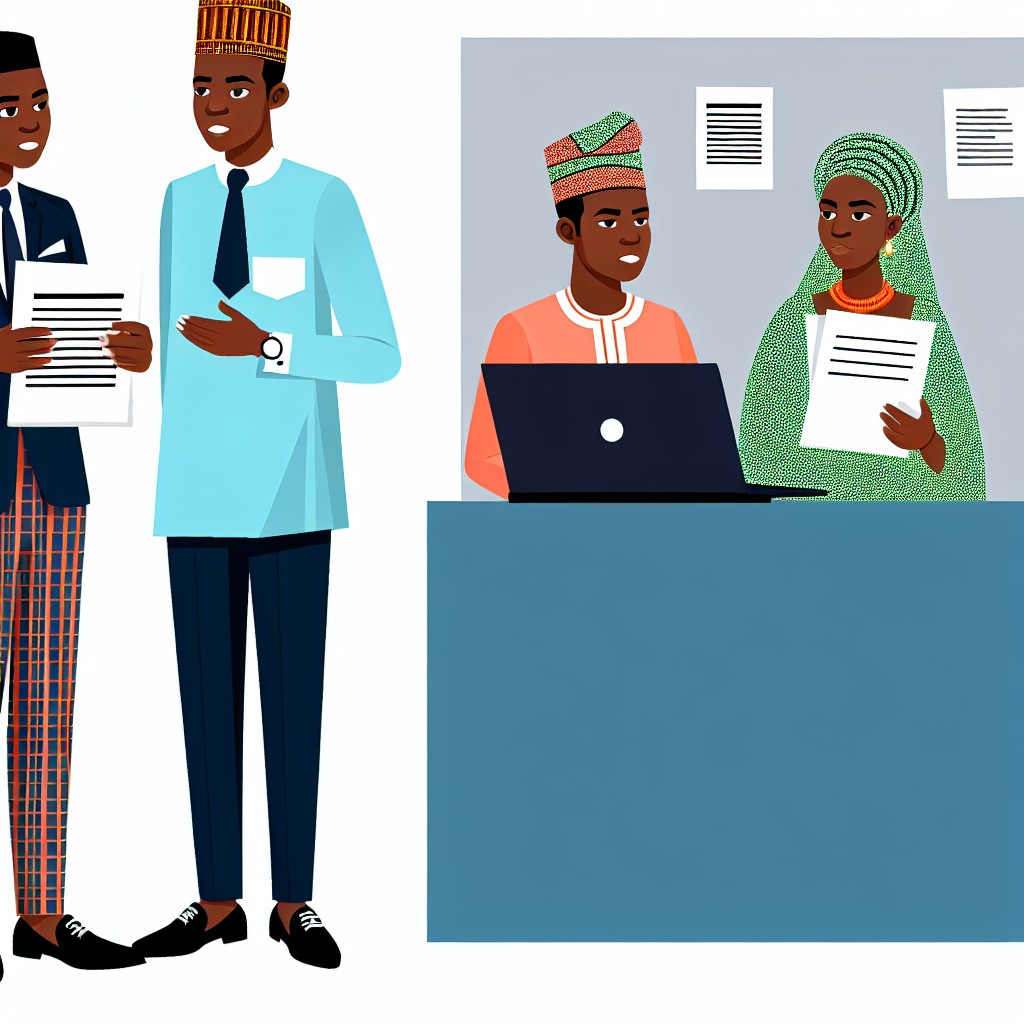
Recognition and Registration of Customary Marriages by Nigerian Law
Legal Recognition of Customary Marriages
Nigerian law acknowledges customary marriages as valid marital unions.
Customary marriages are based on the customs and traditions of Nigerian ethnic groups.
They carry the same legal weight as statutory marriages in specific contexts.
Accordingly, courts recognize these marriages in disputes involving inheritance or child custody.
However, the validity of a customary marriage depends on compliance with local customs.
Moreover, the marriage must adhere to Nigerian statutes governing marriage practices.
Among these laws, the Marriage Act and the Matrimonial Causes Act are significant.
Therefore, couples must satisfy both customary requirements and legal stipulations to ensure validity.
Registration Process of Customary Marriages
Although customary marriages traditionally do not require formal registration, Nigerian law encourages it.
Registration confirms the marriage’s existence and protects the spouses’ legal rights.
The government set up registries to facilitate customary marriage registration across states.
Couples may register their marriage at the local government or state marriage registry.
To register, the couple must present evidence of the customary rites performed.
This evidence often includes attestation by family elders or community leaders.
Additionally, couples provide identification documents such as birth certificates or national IDs.
After registration, the couple receives a customary marriage certificate recognizing the union legally.
Benefits of Registering Customary Marriages
Registration provides formal proof of marriage, easing legal procedures.
It safeguards spouses’ property and inheritance rights under Nigerian law.
Moreover, registered marriages enable easier access to spousal benefits like insurance.
Registered couples also find it easier to obtain divorce or separation decrees if necessary.
Without registration, spouses may face difficulties proving their marital status in courts.
Therefore, registration enhances the legal protections for both partners and their children.
Considerations Regarding Customary Marriage Registration
Some Nigerians neglect registration due to traditional views or lack of awareness.
Many communities continue to prioritize customs over formal legal procedures.
Consequently, some customary marriages remain unregistered and legally vulnerable.
Furthermore, inconsistent implementation of registration policies exists across Nigerian states.
Therefore, couples should seek legal advice to understand registration requirements locally.
This guidance helps ensure their customary marriage is both recognized and protected.
Common Challenges and Disputes Arising from Customary Marriages
Recognition and Proof of Marriage
Many disputes arise from the inability to prove a customary marriage legally.
Customary marriages often lack formal documentation or registration.
Consequently, spouses face challenges when asserting marital rights in courts.
Mrs. Chinyere Okafor struggled to prove her marriage during inheritance claims.
Therefore, failure to register customary marriages creates uncertainty and legal battles.
Inheritance and Succession Conflicts
Inheritance disputes commonly occur among families of customary marriage couples.
Relatives sometimes deny spouses their rightful property shares after a spouse’s death.
Customary laws differ across ethnic groups, causing confusion over succession rights.
Mr. Adebayo Salami’s widow faced hurdles claiming property from her late husband’s family.
Thus, unclear inheritance rules often generate prolonged family disagreements.
Polygamous Marriages and Related Issues
Customary marriage permits polygamy, which can lead to complex disputes.
Jealousy and competition frequently escalate among co-wives over resources and status.
Moreover, husbands sometimes struggle to balance responsibilities fairly among wives.
In several cases, polygamous arrangements resulted in breakdowns of family harmony.
Accordingly, polygamy poses challenges to marital stability and legal clarity.
Rights of Children from Customary Marriages
Disputes often arise regarding children’s rights to inheritance or legitimacy.
Recognition of children’s status varies based on the customary marriage status of parents.
Children of unregistered customary marriages may face discrimination over inheritance claims.
Adeola Ige fought a lengthy case to secure her children’s inheritance rights.
Consequently, the legal treatment of children complicates family disputes under customary law.
Divorce and Maintenance Disagreements
Divorce under customary law often triggers conflict over property and child custody.
The informal nature of customary marriages complicates enforcement of maintenance orders.
Mrs. Ngozi Anozie encountered difficulties in obtaining spousal support after divorce.
Court rulings sometimes contradict customary practices, fueling disputes further.
Hence, couples frequently disagree about their responsibilities after separation.
Role of Family and Community in Disputes
Families and communities often intervene in customary marriage conflicts.
Traditional leaders sometimes mediate or enforce customary marriage norms.
However, their decisions may conflict with statutory law or individual rights.
Mr. Emeka Nwosu experienced community pressure affecting his marriage dispute resolution.
Therefore, external influences complicate the peaceful settlement of customary marriage issues.
Impact of Customary Marriage Laws on Inheritance and Property Rights
Inheritance Rights under Customary Marriage
Customary marriage laws significantly influence inheritance rights in Nigeria.
These laws often vary based on ethnic and regional customs.
For instance, in the Igbo culture, inheritance typically favors male descendants.
Meanwhile, Yoruba customary law may allow widows some inheritance rights.
Therefore, spouses in a customary marriage may not have the same legal protections as those in statutory marriages.
Furthermore, some customary systems prioritize the deceased’s extended family over the spouse.
Consequently, customary marriage can affect the distribution of a deceased partner’s estate.
In many cases, property passes to children or male relatives first.
This can leave widows or widowers with limited or no share of the inheritance.
Property Rights within Customary Marriages
Customary marriage laws also impact property rights during the marriage.
Normally, the husband holds ownership of family property under many customs.
Wives may have limited rights to acquire or dispose of property independently.
In some communities, women’s rights to property remain conditional on their marital status.
Moreover, customary laws may restrict women from inheriting land or real estate.
As a result, spouses must understand their property rights before entering customary marriages.
Customary practices might not recognize joint ownership of marital assets.
Thus, disputes often arise when couples separate or when one partner dies.
Legal advice can help couples navigate property rights effectively.
Legal Recognition and Enforcement Challenges
Customary marriage laws create challenges in the legal enforcement of inheritance rights.
Some customary marriages are not formally registered, complicating claims.
Courts may face difficulties in interpreting different customary practices.
In certain cases, statutory law may conflict with customary inheritance rules.
Therefore, individuals often require legal assistance to assert their rights.
The absence of a written marriage contract complicates property disputes further.
Nonetheless, awareness of specific ethnic customs helps in protecting one’s estate.
Additionally, some states in Nigeria have begun harmonizing customary laws with statutory provisions.
This progress aims to offer better protection for spouses and heirs.
Measures to Protect Spouses and Heirs in Customary Marriages
Couples in customary marriages should consider formalizing agreements on property rights.
They may enter into written contracts to protect their inheritance interests.
Such agreements help clarify ownership and avoid misunderstandings.
Moreover, engaging a family lawyer familiar with customary laws is advisable.
This legal guidance ensures that spouses understand their rights fully.
Wills and estate planning are also important for managing inheritance issues.
Families should discuss property distribution openly to prevent conflicts.
Finally, community education about customary marriage laws benefits all parties involved.
It fosters awareness and encourages equitable arrangements within families.
Recent Reforms and Legal Developments Affecting Customary Marriage Laws
Modernization of Customary Marriage Framework
The Nigerian government has introduced reforms to modernize customary marriage laws.
These changes aim to enhance legal recognition and protections for customary marriages.
Moreover, the reforms address inconsistencies across different ethnic and regional practices.
As a result, couples involved in customary marriages now experience clearer rights and responsibilities.
For instance, states like Lagos and Rivers have revised their customary marriage legislation recently.
Recognition and Registration of Customary Marriages
States increasingly require the registration of customary marriages to ensure legal recognition.
The Lagos State Customary Marriage Law now mandates formal registration within 30 days.
This step helps prevent disputes related to inheritance and marital rights.
Additionally, registered marriages gain easier enforcement in courts compared to unregistered ones.
Therefore, couples are encouraged to comply promptly with registration requirements.
Enhancements in Women’s Rights under Customary Law
Recent legal developments strengthen women’s rights in customary marriages.
Laws now protect women against forced marriages and harmful traditional practices.
Furthermore, women gain improved rights concerning property ownership and inheritance.
This change marks a shift towards gender equality within customary marriage frameworks.
Several advocacy groups, such as the Abuja Legal Aid Initiative, actively promoted these reforms.
Impact of the Domestic Violence Act on Customary Marriages
The Domestic Violence Act extends protections to parties in customary marriages.
It prohibits violence and abuse within all recognized marital unions, including customary ones.
Consequently, victims in customary marriages can seek legal remedies and protection orders.
Law enforcement agencies now receive training on handling cases from customary marriage contexts.
This ensures better support for vulnerable individuals within customary marriage structures.
Judicial Decisions Influencing Customary Marriage Law
Recent court rulings clarify and reinforce customary marriage rights across Nigeria.
For example, the case of Nnadi v. Nnadi established clearer criteria for matrimonial property division.
Judges increasingly consider both statutory and customary elements during dispute resolutions.
These developments enhance legal certainty for families married under customary law.
Legal practitioners like Funmi Adeyemi emphasize the importance of these judicial precedents.
Additional Resources
A Critical Analysis of Nigeria’s Recent Violence Against Persons …