




Traditional Attire and Ethnic Heritage
Traditional wedding attire expresses ethnic heritage through visible clothing choices.
Moreover, distinctive garments connect personal celebrations with cultural identity.
Each clothing element can communicate belonging without spoken explanation.
Distinctive Garments
Garments give wedding clothing a recognizable cultural character.
They also help wearers present heritage through carefully selected forms and details.
Furthermore, traditional garments create a visible link between identity and celebration.
Fabrics as Cultural Expressions
Fabrics contribute texture, color, and meaning to traditional wedding attire.
Therefore, fabric choices can strengthen the connection between clothing and ethnic heritage.
They also make cultural identity visible through the material itself.
Patterns and Visual Meaning
Patterns add visual distinction to wedding clothing.
Consequently, repeated designs can communicate cultural belonging through appearance.
These patterns preserve identity by carrying recognizable visual features into wedding celebrations.
Styling and Personal Presentation
Styling brings garments, fabrics, and patterns together into a complete expression.
It shapes how wearers present cultural identity during the wedding.
Additionally, styling allows individuals to express heritage while maintaining a personal appearance.
Preserving Identity Through Clothing
Traditional attire keeps cultural identity visible within important personal celebrations.
Wedding clothing therefore does more than create a ceremonial appearance.
It preserves heritage by carrying distinctive garments, fabrics, patterns, and styling into shared cultural moments.
Fashion as a Language of Meaning
Wedding fashion communicates identity through deliberate choices.
These choices can carry emotional, social, and spiritual meaning.
Each visual detail can express values, blessings, status, spirituality, and hopes for marriage.
Colours and Shared Values
Colours can communicate feelings, principles, and intentions surrounding the wedding.
A chosen colour may represent joy, unity, respect, strength, or peace.
Families can coordinate colours to express shared values and collective support.
Furthermore, colour choices can connect the couple’s appearance with the ceremony’s emotional atmosphere.
Therefore, colour gives the celebration a visible sense of purpose.
Motifs and Spoken Blessings
Motifs can transform visual design into a language of hopes and blessings.
A repeated motif may express continuity, unity, protection, or prosperity.
Its presence can remind viewers about qualities families wish to encourage.
Moreover, motifs communicate meaning without requiring spoken explanation.
Meaningful designs can reflect shared aspirations for married life.
Accessories and Social Meaning
Accessories can strengthen a wedding look while communicating personal and social significance.
They may express dignity, belonging, celebration, or connection with family expectations.
Additionally, selected accessories can present the couple’s status within the ceremony.
Their placement and coordination can create an impression of confidence and honour.
Consequently, accessories become meaningful elements rather than separate decorative additions.
Embellishments and Spiritual Expression
Embellishments can add visual depth while reinforcing the ceremony’s symbolic messages.
They may communicate abundance, care, aspiration, or reverence through carefully chosen details.
Spiritual meaning can emerge when embellishments reflect hopes for guidance and protection.
However, families and couples determine the meanings attached to these details.
Thus, embellishment can connect outward beauty with inward intention.
Status Through Visual Detail
Fashion can communicate status through careful, rich, and coordinated details.
These choices may show honour, family support, achievement, or social recognition.
At the same time, status remains connected to cultural meaning.
Visual distinction can affirm the couple’s importance within the wedding community.
Careful styling celebrates relationships while acknowledging responsibilities.
Hopes for the Marriage
Wedding fashion can present the couple’s hopes through symbolic colours, motifs, accessories, and embellishments.
Each element can support messages about unity, happiness, stability, and shared growth.
Furthermore, families can use these details to encourage the couple’s future.
The clothing consequently becomes a visible expression of goodwill surrounding the marriage.
Through these choices, fashion supports the ceremony’s emotional purpose beyond appearance.
Family and Community in Wedding Dressing
Wedding dressing brings family and community members into a shared cultural experience.
Individuals wear distinctive outfits.
Coordinated clothing connects them visually during the celebration.
Creating a Shared Sense of Belonging
Families may coordinate their wedding outfits to show closeness and shared participation.
This visual unity helps members recognise their connection to the couple and one another.
Moreover, matching choices can make each participant feel included in the occasion.
Expressing Family Solidarity
Coordinated dressing presents the family as a united group within the wedding gathering.
Members demonstrate support through shared clothing choices and collective presence.
Consequently, wedding fashion can strengthen the visible bond between relatives and friends.
Encouraging Community Participation
When community members coordinate their outfits, they participate beyond simply attending the wedding.
Their clothing reflects a shared commitment to the celebration and its cultural setting.
Furthermore, coordinated attire connects different participants through a common visual expression.
Balancing Individual and Collective Identity
Wedding dressing allows individuals to express personal identity while joining a coordinated group.
This balance gives each person a place within the wider family and community.
Therefore, coordinated outfits connect personal presence with collective cultural participation.
Find Out More: How Wedding Vendors Experience the Beauty of Nigerian Bridal Fashion
Identity Through Gender, Age, and Social Roles
Wedding fashion reflects identity through the different roles people hold during the celebration.
Gender, age, and social position can influence how each person presents themselves.
Therefore, clothing helps guests recognise responsibilities, relationships, and participation.
The Bride and Groom
The bride and groom receive strong visual attention through their distinct wedding attire.
Their clothing separates their central roles from those of other participants.
However, each person can express individual identity within those recognised roles.
The bride’s fashion communicates her position as a principal participant.
Likewise, the groom’s attire establishes his visible role within the ceremony.
Together, their clothing presents partnership while preserving differences in personal expression.
Moreover, their choices show how gender shapes expectations surrounding wedding appearance.
Parents and Elders
Parents express their connection to the couple through clothing that reflects their family roles.
Their attire distinguishes them from younger relatives and general guests.
Consequently, fashion helps others recognise their closeness to the couple.
Elders also communicate their respected position through a carefully considered appearance.
Their clothing supports the authority and dignity associated with their social role.
Meanwhile, age creates another layer of distinction within the wedding gathering.
Older participants may present themselves differently from younger attendees.
This difference shows generational identity without removing shared participation.
Friends and Wider Guests
Friends use wedding fashion to express support while retaining their individual identities.
Their clothing places them within the celebration without assigning them the couple’s central role.
At the same time, friends can show their relationships with the couple through appearance.
Wider guests participate through fashion that acknowledges the occasion and their presence.
Their dress balances personal choice with the expectations of attending a wedding.
Thus, guest attire defines the boundary between central participants and supporting attendees.
Different forms of dress create visible distinctions across the wedding community.
These distinctions help people understand who leads, supports, represents, or witnesses the celebration.
Social Roles in Visual Form
Wedding fashion turns social roles into visible forms of participation.
The clothing people choose identifies their relationship to the couple.
It also indicates how prominently they participate in the event.
For example, central figures may dress differently from those attending in supporting roles.
Similarly, parents and elders can appear distinct from friends and wider guests.
These differences organise the wedding’s social structure through appearance.
Nevertheless, every participant contributes to the celebration’s collective expression.
Fashion therefore connects individual identity with responsibilities surrounding the couple.
Generational and Personal Expression
Age can influence how participants balance personal preference with social expectations.
Younger guests may express identity differently from parents and elders.
However, each generation can participate meaningfully through its chosen form of dress.
Gender also shapes how people navigate recognised wedding roles.
Participants can follow those roles while maintaining personal distinctions.
As a result, wedding fashion presents identity as both individual and relational.
It shows who people are while revealing how they belong within the celebration.
Explore Further: How Fashion Choices Influence the Atmosphere of Nigerian Weddings
Blending Inherited Style With Contemporary Expression
Couples can connect inherited clothing traditions with contemporary wedding preferences.
This balance allows cultural identity and personal taste to shape the celebration together.
Meanwhile, thoughtful choices can create wedding clothing that feels meaningful, current, and individual.
Keeping Cultural Elements Present
Couples often begin with inherited cultural elements that connect wedding clothing to family identity.
These elements can guide the overall appearance while leaving room for individual interpretation.
However, couples can preserve cultural meaning without copying every traditional detail.
Instead, they can select features that feel personally significant and visually appropriate.
Therefore, wedding fashion becomes a conversation between cultural continuity and present-day preference.
Shaping Tradition Through Modern Cuts
Modern cuts can change how traditional clothing fits, moves, and expresses personal style.
Couples may choose structured silhouettes while retaining recognizable cultural elements.
Likewise, they can adapt familiar forms to create cleaner, simpler, or more individual appearances.
This approach allows inherited fashion to remain relevant within contemporary wedding celebrations.
Consequently, the clothing reflects cultural connection and the couple’s preferred visual identity.
Exploring Fabrics Through Personal Choice
Fabric choices can also create a bridge between inherited fashion and contemporary taste.
Couples may combine familiar fabric qualities with materials that suit their desired appearance.
They can also consider texture, movement, structure, and comfort when selecting their clothing.
Meanwhile, personal preferences can influence whether the final look feels understated, dramatic, relaxed, or formal.
Thus, fabric selection gives couples another way to balance tradition with individuality.
Working With Contemporary Designers
Designers can help couples interpret cultural elements through current creative approaches.
They can adjust shapes, construction, and finishing details while respecting the requested cultural direction.
Furthermore, designers can help coordinate separate preferences within the couple’s overall wedding appearance.
This collaboration gives couples space to communicate what they want their clothing to express.
As a result, the final designs can feel culturally grounded without appearing disconnected from contemporary fashion.
Making Room For Individual Preferences
Personal preference remains central when couples decide how closely to follow inherited fashion.
One partner may prefer a stronger traditional presence, while the other may favour modern styling.
They can address these differences by combining selected cultural elements within complementary designs.
Additionally, each person can choose details that reflect comfort, taste, and a sense of self.
This flexibility prevents wedding fashion from presenting identity as a single, fixed choice.
Creating A Shared Fashion Language
Couples can coordinate their clothing without making every detail identical.
Instead, they can connect their looks through related design choices and balanced styling.
This shared approach presents the couple as connected while preserving separate preferences.
Moreover, it shows how Nigerian wedding fashion can unite inherited identity with personal expression.
Ultimately, contemporary styling does not replace tradition; it gives couples new ways to carry it forward.
Learn More: Why Fabric Choices Shape the Look of Nigerian Weddings
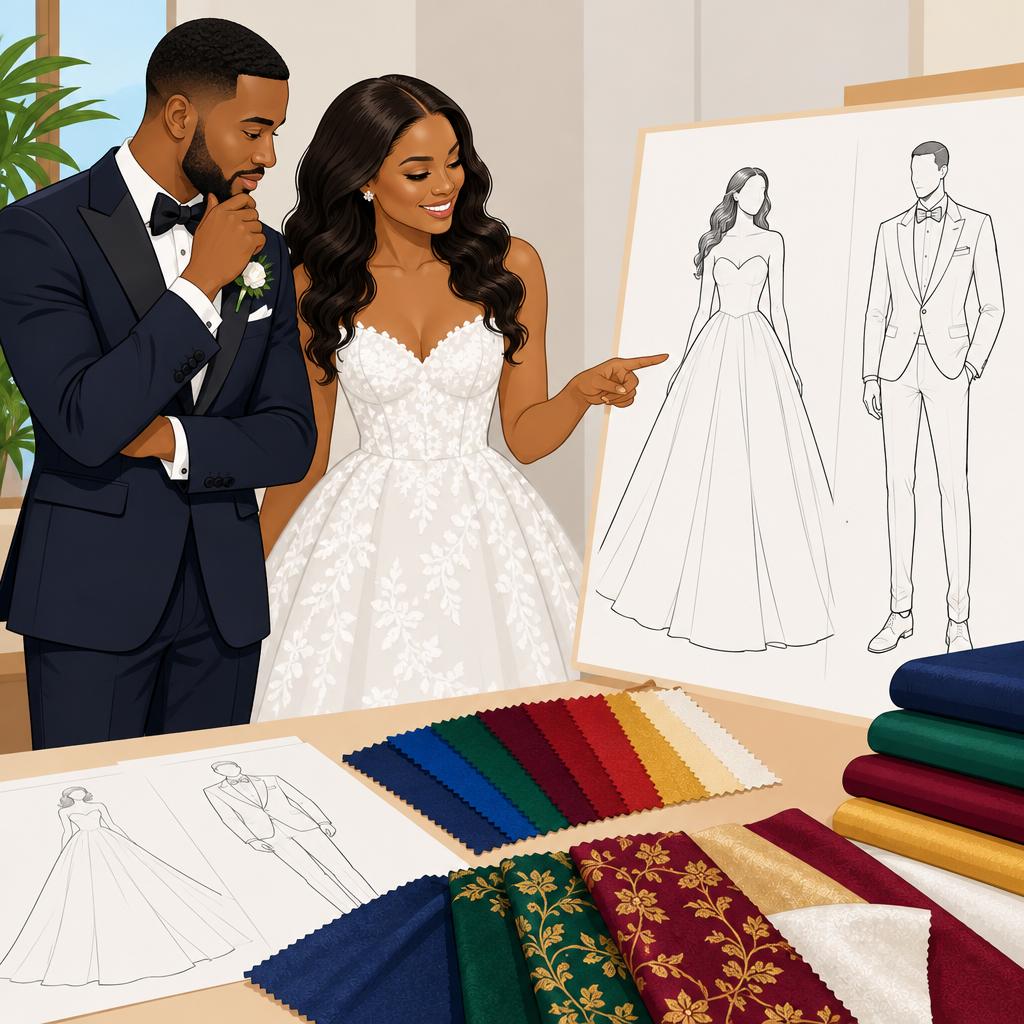
Many Identities Within One Celebration
Nigerian wedding fashion brings diverse cultural identities into one shared national celebration.
Each clothing tradition expresses belonging without requiring people to abandon distinct cultural identities.
Thus, one celebration can represent many identities through varied clothing traditions.
Distinct Cultural Expressions
Different Nigerian identities appear through varied approaches to wedding attire.
These approaches give every cultural expression a visible place within the celebration.
Consequently, wedding fashion presents diversity as an active part of national identity.
Unity Without Uniformity
Shared celebrations connect people while allowing different clothing traditions to remain recognizable.
Therefore, unity does not require everyone to dress in the same way.
Instead, varied attire allows multiple identities to participate within one collective occasion.
Fashion as Cultural Dialogue
Wedding fashion places different cultural expressions within one shared social setting.
Through this arrangement, attire encourages recognition among people with varied identities.
Moreover, the celebration creates room for difference and shared belonging.
Recognizing Difference
Wedding clothing makes cultural differences visible within a shared social setting.
It encourages people to recognize the many identities that shape Nigerian life.
Moreover, this visibility gives cultural diversity a meaningful place within celebration.
Creating Space for Coexistence
When varied traditions appear together, wedding fashion creates space for mutual recognition.
Each expression contributes to a broader understanding of Nigerian cultural identity.
As a result, attire can connect people without reducing their differences.
Strengthening Shared Belonging
Nigerian wedding fashion links cultural distinction with collective national belonging.
It shows how people can celebrate one occasion through different clothing traditions.
Ultimately, the celebration gains strength from coexistence rather than sameness.
See Related Content: The Role of Designers and Stylists in Wedding Vendor Teams
Fashion as Cultural Continuity
Wedding clothing can carry cultural knowledge across generations.
Families connect preparation, participation, visibility, and memory through attire.
These practices help keep heritage active during changing family experiences.
Passing Knowledge Between Generations
Wedding clothing allows older generations to pass cultural knowledge to younger family members.
Through preparation, elders can explain meanings connected with inherited clothing practices.
Meanwhile, younger relatives gain opportunities to observe, ask questions, and participate.
This exchange keeps cultural understanding active rather than limiting it to memory.
Learning Through Participation
Wedding dressing creates a practical setting for younger people to encounter cultural knowledge.
They can learn by watching relatives prepare, arrange, and care for wedding clothing.
Furthermore, participation connects cultural ideas with a significant family experience.
As a result, knowledge becomes easier to remember and share later.
Keeping Heritage Visible
Wedding clothing keeps cultural knowledge visible during an important public family event.
Each appearance gives cultural practices space within a contemporary celebration.
Therefore, attire can maintain continuity while families experience social and generational change.
Visibility also encourages conversations about clothing meanings and related practices.
Building Intergenerational Memory
Wedding fashion can link personal memories with knowledge passed down through families.
Family members may remember clothing alongside the event, preparation, and shared participation.
Consequently, attire helps carry cultural understanding beyond the wedding day.
Younger generations can later revisit that knowledge within their own family experiences.
Supporting Cultural Continuity
Fashion supports continuity when families treat wedding clothing as a connection between generations.
Older relatives contribute knowledge, while younger relatives help carry it forward.
In this way, wedding attire remains part of an ongoing cultural conversation.
It keeps heritage present through clothing, learning, participation, and remembrance.
Cultural Exchange and Global Fashion
Cultural exchange introduces Nigerian couples to wider possibilities for wedding fashion.
Global fashion can influence silhouettes, styling choices, fabric preferences, and overall presentation.
However, couples decide which external ideas suit their celebration and personal identity.
Therefore, outside influence does not require couples to abandon inherited cultural meaning.
Adapting External Trends
Couples often adapt external trends instead of accepting them without modification.
They can adjust unfamiliar ideas to reflect their tastes, values, and cultural connections.
Furthermore, adaptation allows modern influences to support cultural expression rather than overshadow it.
This process gives couples greater freedom while maintaining meaningful links to their heritage.
Preserving Meaningful Elements
Even when couples adopt global influences, they can retain culturally important elements.
These elements may guide the appearance, mood, or meaning of wedding attire.
Consequently, fashion becomes a space where new ideas meet established cultural understanding.
Couples preserve identity by choosing changes that complement familiar meaning rather than erase it.
Negotiating Personal and Cultural Identity
Global fashion encourages couples to express individual preferences within cultural expectations.
They negotiate between personal style and meanings attached to wedding clothing.
Additionally, this negotiation can make wedding fashion feel distinctive and culturally connected.
Each decision reflects how couples understand their identities during a significant shared occasion.
Creating Meaningful Combinations
Couples can combine external influences with culturally meaningful choices through deliberate styling decisions.
Such combinations create visual balance between familiarity and innovation.
Moreover, they demonstrate that cultural identity can accommodate change without losing importance.
The resulting style reflects cultural confidence, personal choice, and broader fashion awareness.
Keeping Culture Relevant
Global fashion can encourage couples to reinterpret cultural identity for changing preferences.
This reinterpretation keeps cultural expression active instead of treating it as unchangeable.
At the same time, couples remain responsible for preserving meanings they consider important.
Thus, Nigerian wedding fashion can respond to global exchange while expressing cultural belonging.
Additional Resources
Google search results for How Nigerian Wedding Fashion Reflects Cultural Identity Wedding Fashion
Bing search results for How Nigerian Wedding Fashion Reflects Cultural Identity Wedding Fashion


